How Preventative Plumbing Maintenance Helps Commercial Buildings Avoid Costly Downtime
Plumbing problems in a commercial building can cause a lot more than a bit of inconvenience.
A blocked toilet in a busy office, a leaking pipe in a ceiling space, no hot water in a cafe, or a drainage issue at a school can quickly turn into a bigger problem. Staff get disrupted, tenants get frustrated, customers may be affected, and in some cases, parts of the building might not be usable until the issue is sorted.
That is where preventative plumbing maintenance makes a real difference.
Instead of waiting for something to fail, regular checks help pick up small issues before they turn into expensive repairs or downtime. For property managers, facility managers, schools, hospitality venues, offices, and commercial landlords, this can make day-to-day building management much easier.
Good commercial plumbing maintenance is not about overcomplicating things. It is about knowing what to check, keeping an eye on the systems that get heavy use, and fixing minor faults before they cause disruption.
Small Plumbing Issues Can Become Big Problems
Most plumbing issues do not start as emergencies.
A slow-draining sink might not seem urgent at first. A toilet that needs the odd reset, a small leak under a basin, or a hot water cylinder making unusual noises can all be easy to ignore when everyone is busy.
The problem is that commercial buildings get used a lot. Offices, schools, shops, restaurants, apartment blocks, and public facilities often have several people using the same bathrooms, kitchens, drains, and hot water systems every day.
That extra use puts pressure on the plumbing.
A small leak can damage cabinetry, walls, flooring, insulation, and ceilings. A partially blocked drain can become a full blockage. A worn valve can fail at the worst possible time. A hot water issue can affect hygiene, cleaning, kitchens, bathrooms, and staff facilities.
Preventative plumbing maintenance helps catch these problems early. It gives building owners and managers a chance to deal with repairs in a planned way, instead of reacting to a callout when something has already gone wrong.
Downtime Costs More Than the Repair
In commercial buildings, the repair itself is only one part of the cost.
The bigger cost often comes from disruption.
If a plumbing fault shuts down a bathroom block, staff may have to use another part of the building. If a cafe loses hot water, it may not be able to trade properly. If a school has blocked drains, the issue can quickly become a health and safety concern. If a leak damages a tenancy, the property manager may need to deal with repairs, tenant complaints, insurance, and follow-up work.
This is why plumbing maintenance for businesses should be seen as part of normal building care, not something to think about only when there is a problem.
A planned maintenance visit is usually far easier to manage than an urgent repair. It can be booked at a suitable time, planned around tenants or customers, and handled before the issue affects daily operations.
For busy commercial sites, that kind of planning is worth a lot.
What Preventative Plumbing Maintenance Usually Covers
Preventative maintenance looks different from one building to another. A small office will not need the same checks as a school, restaurant, apartment complex, or industrial site.
That said, there are a few common areas that commercial plumbers will often look at during a maintenance visit.
Bathrooms are usually high on the list. Toilets, urinals, taps, basins, pipework, valves, traps, and flush systems all get plenty of use in commercial buildings. Small faults in these areas can waste water, create mess, or lead to bigger repairs if left too long.
Kitchens and staff areas also need attention. Sinks, dishwashers, hot water supply, waste pipes, taps, and isolation valves can all wear over time. In hospitality spaces, the plumbing works even harder, especially during busy service periods.
Drainage is another major area. Slow drains, smells, gurgling sounds, repeated blockages, or water backing up are all signs something may not be right. Regular checks can help identify build-up, damaged pipework, poor flow, or access issues before the problem gets worse.
Hot water systems should also be checked. Commercial buildings often rely on hot water for cleaning, hand washing, kitchens, showers, staff facilities, and tenant use. A system that is under strain may show warning signs before it fails completely.
Backflow devices, valves, pumps, roof drainage, external taps, and plant room pipework may also need to be included, depending on the building.
Schools and Offices Need Reliable Plumbing
Schools and offices are good examples of why commercial plumbing maintenance matters.
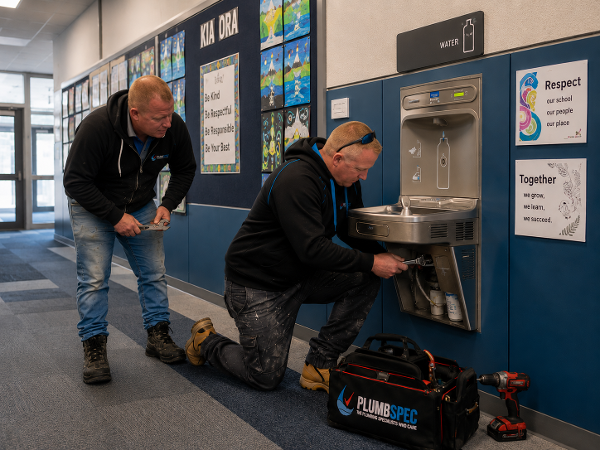
In schools, plumbing systems take a lot of daily use. Toilets, drinking fountains, bathrooms, outdoor taps, cleaning areas, and hot water systems all need to work safely and reliably. A blocked toilet block or leaking pipe can disrupt students, staff, caretakers, and maintenance teams. During term time, it can also be harder to organise repairs without affecting the school day.
In offices, plumbing issues can affect tenants, staff, visitors, and shared facilities. A leaking pipe in a ceiling space can damage work areas. A blocked bathroom can frustrate tenants. A hot water fault in a staff kitchen can create complaints. Even smaller problems can make the building feel poorly managed.
Regular plumbing maintenance gives schools and offices a better chance of spotting issues before they become urgent. It also helps property managers plan repairs during quieter times, school holidays, after hours, or outside peak use.
Hospitality Plumbing Needs Extra Care
Cafes, restaurants, bars, and commercial kitchens rely heavily on plumbing.
Hot water, drainage, hand basins, dishwashers, prep sinks, gas appliances, cleaning areas, and waste systems all need to work properly for the business to operate. If one part fails, the impact can be immediate.
A slow-draining kitchen sink might start as a minor annoyance, but during a busy lunch service it can become a real issue. A hot water fault can affect cleaning and hygiene. A drainage smell can put off customers. A leak under a bench can damage flooring, cabinetry, or equipment.
Hospitality businesses also tend to run to tight schedules. There is often no good time for a plumbing problem. That is why preventative plumbing maintenance is especially useful in these environments.
Regular checks help keep the plumbing working in the background, so staff can get on with running the business.
Property Managers Benefit From Planned Maintenance
For property managers, commercial plumbing maintenance is about control.
Without a maintenance plan, plumbing problems often arrive as urgent calls. A tenant reports a leak, a bathroom stops working, a drain blocks, or a hot water system fails. By that point, the property manager has to organise a repair quickly, manage communication, and deal with any disruption.
A planned approach is calmer and usually more cost-effective.
Regular maintenance gives property managers a clearer picture of the building’s plumbing condition. It can show which areas are wearing out, which systems need attention, and which repairs should be budgeted for.
This is especially useful in older commercial buildings, multi-tenancy sites, and properties with heavy public use. These buildings often have plumbing systems that have been altered over time. Having commercial plumbers check them regularly can help avoid surprises.
Wellington Buildings Can Have Their Own Challenges
Commercial plumbing Wellington work often comes with local quirks.
Many buildings around Wellington are older, built on steep sites, or fitted into tight spaces. Some have shared services, tricky access, older drainage lines, or pipework that has been changed over many years. Weather can also put pressure on roof drainage, stormwater systems, and external plumbing.
This does not mean every building will have major problems. It just means local experience helps.
A plumber who understands Wellington commercial buildings will usually know what to look for. They can spot risk areas, plan around access issues, and give practical advice based on the type of site, not just the plumbing system on paper.
For property owners and managers, that local knowledge can make maintenance simpler.
Maintenance Helps With Compliance and Safety
Plumbing is not only about convenience. It also plays a role in health, safety, and building compliance.
Commercial buildings need safe water supply, working sanitary fixtures, reliable drainage, and properly installed gas systems where gas is used. Some buildings may also have backflow prevention devices that need regular testing.
Preventative maintenance can help building owners stay on top of these responsibilities. It gives them a better record of what has been checked, what needs repair, and what work has already been completed.
This is useful for facility managers, body corporates, schools, landlords, and businesses that need to show they are taking building care seriously.
A Simple Maintenance Plan Can Go a Long Way
Preventative plumbing maintenance does not need to be complicated.
For some sites, it may mean scheduled inspections a few times a year. For others, it may involve a more detailed maintenance programme, especially if the building has commercial kitchens, public bathrooms, backflow devices, pumps, large hot water systems, or older pipework.
The right plan depends on the building, the level of use, and the risk of disruption if something fails.
A good maintenance plan should be practical. It should focus on the areas most likely to cause problems, keep records of repairs, and give clear advice about what needs urgent attention and what can be planned for later.
Keep the Building Running
The main goal of preventative plumbing maintenance is simple. Keep the building running.
For businesses, schools, property managers, and facility managers, that means fewer surprises, less downtime, and a better chance of fixing small problems before they turn into major ones.
Plumbing is one of those things people only tend to notice when it stops working. With the right maintenance, it can quietly do its job in the background.
For commercial buildings in the Wellington region, working with experienced commercial plumbers like Plumbspec can help keep systems safe, reliable, and easier to manage. If the building is heavily used, older, or difficult to access, regular maintenance is even more important.
A bit of planning now can save a lot of stress later.