The Sofa Bed Revival: How Kiwi Holiday Homes Are Quietly Changing
Every summer it happens the same way.
You start with a sensible plan. A couple of families, a few nights away, everyone brings a plate, easy as. Then someone texts: “Any chance we can bring the kids too?” A cousin appears. A mate from uni is “down for New Year’s”. Suddenly the bach guest list doubles, and you’re doing mental maths with pillows.
Kiwi holiday homes have always been like this. They’re meant to be shared. They’re meant to be lived in. And if you grew up in one, you’ll know the unofficial sleeping hierarchy: bunks first, spare beds next, then the lounge floor with a quilt and a bit of optimism.
What’s changed lately isn’t that we’ve stopped hosting. It’s that more people want the holiday home to feel like a proper living, not a storage unit full of mismatched beds and collapsing air mattresses. And that’s where the sofa bed has made a comeback.
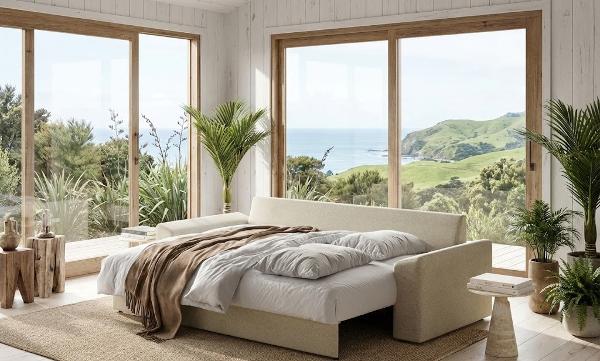
Not the squeaky, thin-mattress version most of us remember. The newer wave is far more deliberate: furniture that looks like it belongs in a nice lounge, but still solves the summer sleeping crunch without drama.
Summer holidays, long weekends, and the New Year pile-on
A lot of furniture trends come and go. The holiday home is different. It’s practical by nature. If something works, people stick with it.
The problem is predictable: the house is fine most of the year, then December arrives and everyone wants a key. Long weekends have a habit of turning into full-house stays. New Year’s is its own beast entirely, where one night can become three and suddenly you’ve got kids sleeping head-to-toe wherever they fit.
And in most holiday homes, the bedrooms are spoken for quickly. Couples take the main rooms. Kids claim the bunks. The “spare room” is often half linen cupboard, half gear storage. Which leaves the living room as the pressure valve.
That’s why sofa beds make so much sense in this specific Kiwi context. They turn the lounge into a reliable sleeping zone, without permanently sacrificing the space.
The living room is doing more jobs than it used to
In a lot of baches and holiday homes, the lounge isn’t just where you sit. It’s where everything happens.
It’s wet togs drying over chairs. Board games on the table. It’s cricket on the TV with the volume up. It’s late-night drinks when the kids finally crash. It’s the one room that stays busy from breakfast to bedtime.
A sofa bed in that space is basically a pressure release. During the day, it’s still a lounge. At night, it becomes one more proper bed that doesn’t involve inflating something, finding a pump, then waking up to someone half on the ground because the seal failed.
It’s a small change that makes the whole house feel more flexible.
Why it matters for kids (and why parents love it)
Ask anyone who hosts family over summer and they’ll tell you: kids are the easiest sleepers, until they’re not.
Cousins love piling into one spot. They’ll happily fall asleep after a full day at the beach or lake. But they also wake up early, they roll around, and they do not care if the “mattress” is actually a folded camping mat.
A sofa bed works because it’s sturdy, predictable, and simple. You can throw down a fitted sheet, add a topper if you want, and you’ve got a proper base that handles wriggly sleepers better than an air bed ever will.
For parents, it’s also a sanity thing. Less setup. Less packing. Fewer “where are the spare blankets?” hunts when it’s already dark and everyone’s tired.
Minor dwellings and sleep-outs are pushing the trend
Another quiet change across New Zealand is the rise of minor dwellings and sleep-outs on holiday properties.
Some are purpose-built. Some are converted garages. Some are small cabins that are brilliant in theory but limited in space. A lot of them need to do double duty: a hangout room by day with a couch and TV, somewhere to sleep by night.
That’s exactly where sofa beds makes the perfect product. They let a minor dwelling feel like a tiny lounge, not a permanent bedroom. It’s a better use of the space, especially when the room might be used as a kids’ zone, a quiet reading spot, or the “escape room” when the main house gets noisy.
And if the property is used outside summer, that flexibility matters even more. You don’t want a bed filling up a room when you’re there for a winter long weekend and just want somewhere to sit with a drink.
Comfort has become part of the conversation
The old bach culture had a bit of pride in roughing it. “She’ll be right.” Sleep on the couch. You’ll survive.
That attitude hasn’t disappeared, but expectations have shifted. People still love the casual feel of a holiday home, but they also like waking up without a sore back. They’re more aware of what “good sleep” feels like.
This is where higher-quality sofa beds have pulled ahead. If the mattress is supportive and the frame doesn’t sag, it changes the whole experience. Guests actually sleep. Hosts don’t have to apologise. People stay longer. The house feels more welcoming.
It’s not about turning the bach into a resort. It’s about taking one stress point out of hosting.
The sofa bed becomes part of the home, not an emergency measure
A good sofa bed doesn’t feel like a compromise. It feels like a real piece of furniture.
That matters in holiday homes because the lounge is usually the most visible space. It’s where you spend the most time, and it’s what guests see first. People want it to look good, especially now that many families invest more in their holiday properties and use them more often.
If the sofa bed looks clunky, it drags the whole room down. If it looks like a well-designed sofa, it blends in, and the “bed” part feels like a bonus rather than the main story.
Where Poynters fits in
In the middle of all this, it’s not surprising that Poynters has become a familiar name in the premium end of the sofa bed market in New Zealand.
They’ve carved out a reputation for stocking design-led, higher-quality sofa beds that suit exactly these multi-use living situations. That matters because most people shopping in this category are not looking for a temporary solution. They want something that looks right in the lounge and holds up to repeated summer use, year after year.
For Kiwi holiday homes, that leadership position makes sense. People aren’t just buying “a spare bed”. They’re buying a better way to live in the space they already have.
Make room for more people, without making the house feel messy
If you strip it back, the sofa bed boom in holiday homes is really about one thing: keeping the bach feeling relaxed, while making it easier to host the way Kiwis actually host.
Summer holidays are social. Long weekends are busy. New Year’s is chaos in the best way. And most of us love that. We just don’t love the part where you’re digging through a cupboard for a deflated air mattress and trying to work out where everyone will sleep.
A good sofa bed won’t solve everything. You’ll still have kids on the floor at some point. Someone will still forget their pillow. But it can turn the living room into a proper, reliable sleeping space, without changing the feel of the home.
And in a Kiwi holiday home, that’s about as close to luxury as it gets: not more space, but space that works better when it counts.