NZ Chosen to Launch World-First Reusable Sanitary Product Targeting Plastic Waste

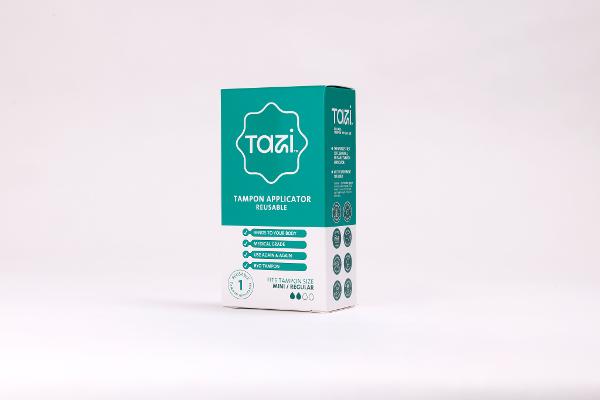
Thousands of Kiwi women are set to access a world-first sanitary product designed to reduce reliance on single-use plastic, with tonnes of non-biodegradable waste from disposable tampon applicators estimated to be sent to landfill in New Zealand each year.
The move follows a five-year research and development programme involving feedback from Kiwi women.
According to a new report from the World Health Organization, around 12 billion disposable menstrual products are used each year globally, contributing to plastic waste, landfill volumes and associated carbon emissions. Over a lifetime, an individual may use approximately 10,000 menstrual products, many of which contain plastic that can take hundreds of years to break down.
The new product, known as Tazi, is the first bendable sanitary applicator and can be reused across multiple menstrual cycles, providing an alternative to disposable plastic applicators.
Its developers say the product is designed to address a longstanding environmental challenge within the menstrual health sector, where convenience, hygiene requirements and limited innovation have contributed to continued reliance on single-use products.
The New Zealand launch follows a scientific and user testing programme where feedback from Kiwi women was used to refine the product’s design, usability and performance in real-world conditions.
Peter Price, co-founder and CEO of Tazi, says plastic waste from menstrual products has historically received less attention than other forms of single-use consumer packaging.
“Billions of menstrual products are disposed of every year, yet this is an area where the environmental impact is still rarely discussed openly.
“While consumers are increasingly being encouraged to reduce their use of plastic bags, drink bottles and disposable packaging, there have been comparatively few practical alternatives developed for sanitary applicators.
“Tazi is designed to replace the disposable applicator rather than requiring users to completely change the menstrual products they are comfortable using,” he says.
Price says the ability to reuse the applicator across many cycles will help reduce plastic consumption without compromising convenience or hygiene.
The protected insertion method also minimises direct skin contact, helping reduce the potential transfer of bacteria from the hands or beneath fingernails.
Din Redzepagic, pharmacist and COO of Zoom Pharmacy, says environmental improvements are more likely to be adopted when they also offer practical benefits for consumers.
“For sustainable products to achieve widespread use, they need to be convenient, hygienic and easy to incorporate into people’s existing routines.
“This provides consumers with a way to reduce their reliance on disposable plastic applicators while continuing to use familiar sanitary products,” he says.
The product is also intended to help address preventable hygiene risks, including rare but serious conditions such as toxic shock syndrome.
Emeritus Professor Ian Frazer, immunologist and co-developer of the HPV vaccine, says reducing unnecessary contact can support improved hygiene practices.
“Personal hygiene is a critical part of avoiding infections we would rather not have. If you can remove the need for unprotected touch, you reduce the risk of transferring organisms to or from the body.
“We all carry microorganisms on our bodies. The key is avoiding introducing the wrong ones into areas where they can cause problems, or spreading them beyond where they should be,” he says.
The product is also designed for use in environments where access to appropriate handwashing facilities may be limited, including while travelling, at festivals or in public facilities.
New Zealand was chosen as the first international market because of its position as an early adopter of menstrual health and sustainability policies.
Government initiatives have included providing free sanitary products in schools, with environmentally friendly product options available to young people.
Price says New Zealand also has one of the few markets where sanitary product use is relatively evenly divided between applicator and non-applicator products, making it well suited to testing a product designed to accommodate both preferences.
Under a new agreement, Zoom Pharmacy, New Zealand’s largest online prescription pharmacy, will become the first retailer to provide nationwide access to the product range.
“New Zealand consumers have played an important role in developing the product over the past five years.
“The launch will allow us to measure the potential reduction in applicator waste, understand consumer adoption and refine the model before expanding into larger international markets,” he says.
The New Zealand programme is expected to inform a broader international rollout and support the development of further reusable menstrual health solutions.
“We believe menstrual products should be part of the wider conversation around reducing single-use plastics.
“This is a category used by billions of people, so even incremental changes in product design and consumer behaviour have the potential to prevent significant volumes of plastic from entering landfill and the wider environment,” says Price.
For more information, visit mytazi.co.nz.