Travelling With a Cochlear Implant This Summer: A Practical Guide for New Zealanders

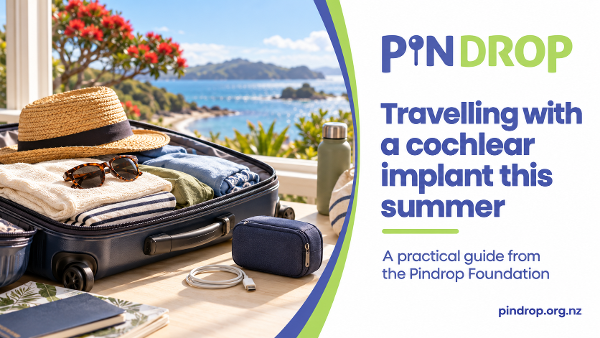
Summer is approaching, and many New Zealanders are planning a few days at the bach, a road trip around the country, a visit to family in Australia or a trip further afield.
For people who use a cochlear implant, there is one more thing to plan alongside the togs and sunscreen: their hearing equipment.
A little preparation can make the difference between a relaxed holiday and a stressful few days without sound. The Pindrop Foundation, a New Zealand charity supporting adults with significant hearing loss, has put together practical guidance on getting ready, moving through airports and knowing what to do if a sound processor stops working away from home. The equipment advice follows Cochlear’s guidance for its Nucleus and Kanso sound processors.
Check equipment well before leaving
The best time to discover a faulty charger or a spare processor that isn’t working is before the trip, not at the airport.
Before packing, cochlear implant users should:
- Test their charger, spare batteries and any backup processor
- Check that a spare processor is working and correctly programmed for them
- Contact their implant team early if anything has been playing up
- Ask their clinic whether to carry a copy of their current MAP, the settings their processor uses, and how it could be accessed away from home
- Save their clinic’s phone number and email address, and find out how to get support over the summer holidays
People without a spare processor can ask their clinic or Cochlear what backup options might be available. Clinics often run reduced hours over summer, so it pays to ask early.
Pack a small hearing kit
When flying, the processor, spare equipment and charging gear should travel in hand luggage, never in checked bags. Keeping everything together in a small pouch makes it easy to find when needed.
Depending on the processor and the type of trip, a hearing kit might include:
- Charged spare batteries, or enough compatible disposable batteries to cover the trip and any delays
- The charger, cables and the correct power adaptor for the destination
- A spare coil or cable, where the model uses them, and microphone covers
- The drying equipment recommended for the processor
- A protective case, a soft cleaning cloth and a safety line or retention accessory
- Aqua+ accessories, if swimming is planned
- An implant identification card and a working backup processor, if available
People who also wear a hearing aid should remember its batteries, charger and other essentials too.
Batteries and power banks need extra care
Spare batteries and power banks belong in cabin baggage, with their terminals protected against short circuits. Rules vary between airlines, so travellers should check the limits for every airline on their itinerary.
It is also worth planning for long connections and delays. Some airlines restrict power bank use on board. Jetstar, for example, does not allow power banks to be used or charged during flights. Starting the journey fully charged, with charged spares, reduces the risk of running out of power in transit.
If a cabin bag is taken at the gate to go in the hold, travellers should remove their hearing kit, spare batteries and power bank first.
Getting through airport security
Cochlear sound processors can be worn through airport metal detectors and body scanners. The processor may set off an alarm, and the wearer may hear some buzzing as they pass through.
Travellers should tell the security officer they have a cochlear implant and keep their implant identification card handy.
If asked to remove the processor, Cochlear advises switching it off and placing it in its case inside hand luggage before it goes through the X-ray machine. It should not go loose on the conveyor belt, as static electricity could affect the device. It also helps to let the officer know if instructions will be hard to hear while the processor is off.
Airport announcements can be difficult to follow in a busy terminal. Watching the departure screens and airline app helps, and travellers can ask gate staff to tell them directly about boarding or any changes. Air New Zealand provides information about hearing support when flying for passengers who want to arrange assistance.
On the plane
Cochlear sound processors can stay on throughout the flight, including take-off and landing.
Some airlines may require the processor to be in flight mode. It is worth learning how to switch this on before travelling. Flight mode allows the user to keep hearing through the processor, but wireless streaming is unavailable while it is turned on.
Passengers should let the cabin crew know if they might miss announcements, particularly if they plan to remove the processor to sleep, and ask to be told about any important instructions.
For longer flights, downloading programmes, films or podcasts before leaving home avoids relying on the aircraft’s entertainment system. Users who want to connect to the seat screen should check how their equipment connects beforehand, as Bluetooth may not be available. Where wireless use is permitted, a compatible Mini Microphone 2+ with the right audio cable or adaptor may help.
Protecting the processor from summer heat
Beach days, hot cars and humid weather all call for a little extra care:
- Keep the processor out of direct sunlight
- Never leave it in a parked car
- Store it in its protective case somewhere cool and dry when not in use
- Apply sunscreen and insect repellent before putting the processor on, and keep sprays and lotions away from it when reapplying
- Check for sand and dirt at the end of the day, wipe it with a soft cloth and follow the usual drying routine
- Use a safety line or retention accessory on windy boat trips or active days out
Before getting in the water
Swimming with a sound processor requires the correct setup for that specific model. A water-resistance rating has limits, and the approved Aqua+ accessories matter.
Users should check that the sleeve, coil and battery arrangement are approved for their model, and practise fitting everything at home before the trip. The Nucleus 8 Aqua+ setup, for example, needs an approved rechargeable battery module and an Aqua+ coil. Other models have different requirements, so following the user guide for the exact processor is essential.
That includes checking the permitted depth and time in the water, inspecting accessories for damage, and following the rinsing and drying instructions afterwards.
People who prefer to swim without their processor should store it somewhere secure and dry. Agreeing on a simple visual signal with swimming companions means they can still get the wearer’s attention.
If the processor stops working
Losing sound away from home can be unsettling. The first step is to get somewhere safe, let a travel companion know what has happened, and work through the troubleshooting guide for the processor.
Depending on the model, the first checks may include:
- Confirming the processor is switched on and has power, and trying a charged spare battery if the model has removable batteries
- Checking that the processor or coil is correctly positioned over the implant
- Checking the coil cable connection, where the model has one, and trying a compatible spare cable
- Checking the volume and programme settings
- Switching to a backup processor, if available, and contacting the implant clinic or Cochlear if the problem continues
If the processor has got wet, it should be wiped with a soft cloth and dried following the model’s specific instructions. Nucleus and Kanso models have different drying arrangements and times. Hairdryers and other household appliances should not be used.
A simple note saved on a phone, or written on a small card, can help in the meantime. For example: “I have hearing loss and my sound processor isn’t working. Please face me and write down important information.” Text messages, a pen and paper or a transcription app tested before the trip can also help.
Planning for overnight stays
People who remove their processor at night may not hear a fire alarm or a knock at the door. Before arriving, it is worth telling the accommodation provider, asking about suitable alerting equipment, and agreeing how staff would make contact in an emergency. The same conversation is worth having with friends or whānau when staying with them.
Choosing one spot to charge and store equipment each night makes it easier to keep track of. A quick check of bedside tables and power points before checking out helps too. Chargers are easy to leave behind.
Check insurance cover
Travellers should ask their insurer specifically about their processor and accessories, including any loan equipment. Key questions include cover for loss, theft and accidental damage, the replacement limit, the excess, and whether cover applies at the destination, including within New Zealand.
Cochlear recommends insuring sound processors. A manufacturer’s warranty does not replace cover for loss or accidental damage.
Keep help within reach
Before leaving, cochlear implant users should save their own implant clinic’s phone number and email, along with these contacts:
- Cochlear New Zealand: 0800 444 819
- Cochlear Australia: 1800 620 929
- Customer service email: customerservice@cochlear.com
For other destinations, Cochlear’s global contact page and Clinic Finder can identify local support. This is especially important for travel to remote areas, along with asking how replacement equipment would reach the traveller if needed.
At family catch-ups and on tours, a Mini Microphone can help in noisy settings. Letting people know what makes it easier to hear them, and taking quiet breaks when needed, can make social occasions more enjoyable.
Users should always check the guide for their exact processor and follow advice from their implant team. Airline requirements can change, so these should be checked before every trip.
About the Pindrop Foundation
Established in 2006, the Pindrop Foundation is committed to ensuring everyone in New Zealand can experience good hearing. The charity provides awareness, education, information, advocacy and peer support for adults with significant hearing loss who are considering or using cochlear implants.
Pindrop is a founding member of the Cochlear Implant International Community of Action, part of a global effort to expand access to cochlear implants for adults who could benefit.
The full guide, Travelling With a Cochlear Implant This Summer, is available on the Pindrop Foundation website, with links to Cochlear’s user guides and airline information.
With a little preparation, a cochlear implant should be no barrier to enjoying the summer break, wherever it takes you.