When a Grieving Child Is Bullied at School: Practical Advice for New Zealand Parents and Caregivers

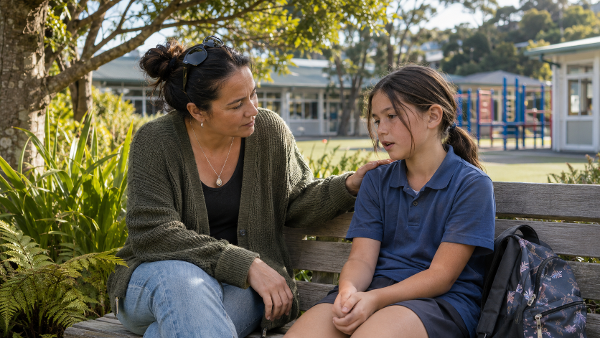
For a child whose parent or sibling has died, school can be one of the few places that still feels normal. When it becomes somewhere they are teased, left out or targeted, the impact can be significant, both for the child and for the whānau trying to support them.
Kenzie's Gift, a New Zealand charity supporting young people affected by grief and serious illness, regularly hears from parents and caregivers whose child is being bullied after a death in the family. The charity has put together practical guidance on what parents can do, how to work with the school, and how to look after their own wellbeing along the way.
What bullying can look like
Bullying generally means someone repeatedly hurting, threatening or being unkind to another person. It can look different depending on a child's age and their peer group.
A grieving child may be singled out precisely because someone close to them has died. They might be left out of games and activities, become the target of unkind comments or jokes, or in more serious cases be physically hurt. A growing number of young people also experience bullying online, through social media and messaging apps.
Believe them, listen and validate
It can be hard to accept what a child is saying. Parents may struggle to believe other children could be so cruel, or wonder whether their child has misread a situation.
Research suggests many children never tell an adult they are being bullied, often because they doubt they will be believed or that anything will change. If a child does find the courage to speak up, it should be taken seriously.
Acknowledge how upsetting it is, reassure them that you are on their side, and let them know you will work out what to do next together.
Help them plan what to say
Practising a few calm, simple responses can help a child feel less powerless. A response delivered without much emotion gives the person bullying them less of a reaction to feed on.
If a child is being picked on because of a death in the family, they might say something like: "You're lucky you've never had someone die. It's really hard." They can then change the subject or walk away, for example: "I'm going to get my lunch now."
Encouraging them to spend time with friends who are kind and understanding also helps.
Talk to the school early
Schools can only act on what they know about. Kenzie's Gift suggests parents:
Speak with a teacher or staff member they trust, explaining what their child has said and any changes they have noticed in their child's wellbeing
Ask about the school's bullying policy and what steps will be taken next
Ask a family member or friend to attend on their behalf if a face-to-face meeting feels like too much
Put concerns in an email so there is a written record for any follow-up
When it is not bullying, but it still hurts
Not every painful moment at school is bullying. After a death, children can become very sensitive to careless words from friends and classmates, and those moments can still affect how they feel about school and their friendships.
A throwaway playground line such as "you were too slow, you're dead" means nothing to most children. To a child whose mum or brother has just died, it can land very differently. A friend might also say it is weird to include a brother who died in an imaginary game. Usually this is not meant to hurt. Many children simply have no experience of death and find it hard to understand what their classmate is going through.
For younger children especially, it helps to explain why their friends might not understand. Parents can also help them practise ways to share how they feel, for example: "I really miss my mum. Talking about her during the day helps me miss her less."
Letting the teacher know which kinds of comments are hardest means staff can keep an eye on playground interactions and spot when extra support is needed.
Why this can hit parents so hard
Grief often brings secondary losses, and one of the most common is a sense of losing control. Parents naturally want to protect their children from pain, and the death of someone close is a reminder that this is not always possible.
Bullying adds another threat to a child's wellbeing that happens away from home, when a parent is not there to step in, and it can be difficult to get the full picture. For a parent who is grieving too, it can feel like the last straw.
Kenzie's Gift reminds parents that their own wellbeing matters. Supporting a child through something this hard is much harder when running on empty. The charity offers a free article on self-care when you're grieving and a Parenting with Grief support kit for mātua and caregivers.
Opening up conversations about grief in schools
Kenzie's Gift believes talking openly about grief and difficult emotions in schools is an important part of building a support network around grieving children.
Through Superhero Friday, schools across Aotearoa can take part in a fun, interactive fundraiser that helps pupils learn how to navigate tough feelings, while raising money to support grieving young people nationwide.
Where to get support
Kenzie's Gift provides up to 12 fully funded one-on-one therapy sessions with registered mental health professionals. Support is available for young New Zealanders aged 3 to 24 whose parent, primary caregiver or sibling has died or is seriously ill, and for young people facing serious illness themselves.
If a child or young person needs help right now, free support is available around the clock:
1737: Free call or text, 24 hours a day, to speak with a trained counsellor
Youthline: For young people aged 12 to 24. Call 0800 376 633 or text 234
Suicide Crisis Helpline: 0508 828 865
About Kenzie's Gift
Kenzie's Gift was founded by Nic Russell in memory of her three-year-old daughter, Kenzie. The registered charity supports tamariki and mātātahi across Aotearoa whose parent, caregiver or sibling has died or is seriously ill, as well as young people facing serious illness themselves.
Its team of clinical psychologists and registered psychotherapists has supported more than 6,000 young people through funded therapy, support kits, free online articles and The Grief Podcast. Kenzie's Gift receives no government funding and relies on donations, fundraising and community support to continue its work.
The full article, My grieving child is being bullied at school. What do I do?, is available on the Kenzie's Gift website, along with other free resources for parents, caregivers and young people.
No parent can stop every unkind word their child hears. What makes a real difference is believing them, working alongside the school, and making sure neither the child nor the parent has to carry it alone.