Retaining Wall Warning Signs: Taranaki Contractor Explains When Repair Is No Longer Enough

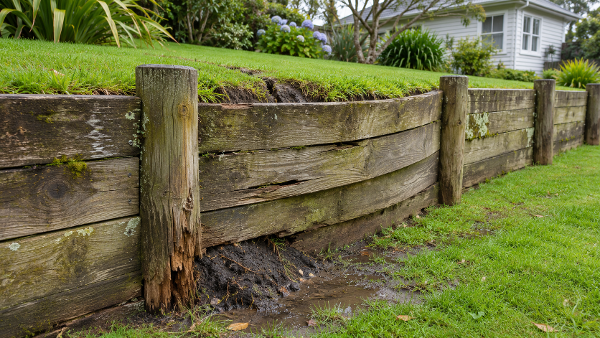
Most retaining walls do their job quietly for decades, holding back soil that would otherwise move. When a wall starts to struggle, it usually shows it. The challenge for property owners is recognising those signs early and knowing when a patch-up will no longer be enough.
Hawera-based earthmoving and civil construction contractor Excavat builds and replaces retaining walls across Taranaki and Whanganui. The company has published guidance on the most common warning signs of retaining wall failure, what they usually mean, and when it is time to bring in a professional.
Why retaining walls fail
Almost every retaining wall problem comes back to pressure. Soil pushes against the back of the wall, and that pressure rises sharply when the ground behind it becomes saturated. Wet soil is heavy and pushes far harder than dry soil.
Common causes of failure include:
- Poor or blocked drainage
- A wall that was undersized for the load it holds
- Ageing timber or deteriorating materials
- Extra weight added above the wall, such as a driveway, shed or new concrete slab
- Ground movement the original design never allowed for
Six warning signs to look for
Leaning or tilting. Some walls are deliberately built with a slight backward lean. The concern is a wall leaning forward, towards whatever sits below it. A lean that worsens over time means the wall is losing its fight with the soil behind it.
Bulging. A wall that bows outward in the middle while the ends stay put is deforming under load. This is common in timber pole and block walls, and it rarely corrects itself.
Cracking. Fine hairline cracks are not always serious, but cracks that are widening, running diagonally or stepping through mortar joints should be checked. In timber walls, split sleepers, rot at ground level and snapped or sheared posts are all warning signs.
Blocked or missing drainage. A healthy wall lets water out. If no water appears from weep holes or outlets after heavy rain, or water pools behind or at the base of the wall, the drainage may be blocked or may never have been installed properly. Excavat says poor drainage is behind a large share of the failures it sees.
Soil movement around the wall. Owners should check the ground as well as the wall. Cracks in lawns or paving above, a gap opening between the wall and the soil, shifting fences or paths, and soil spilling out at the base all suggest the ground is moving.
Erosion and exposed footings. Soil washing out from under or around the base means the wall is losing support. Exposed footings or undermined posts are a serious sign, particularly on sloping sites or where stormwater runs along the base.
Repair or replace?
Some problems can be repaired. Clearing blocked drainage, replacing a few rotten sleepers or fixing a localised crack can add years to an otherwise sound wall.
Replacement usually becomes the more realistic option when:
- The wall is leaning or bulging across a large section, not just one spot
- The ground behind it is actively moving or has already slipped
- The wall was never designed for the load it now carries
- Structural parts such as posts, footings or reinforcing are compromised
- A house, driveway, road or footpath would be at risk if the wall failed
At that stage, patching a wall often only buys time. An engineered replacement addresses the underlying cause, whether that is drainage, load or ground conditions.
When to call a professional
Not every small crack needs a site visit. Excavat recommends getting a professional opinion if a wall is noticeably leaning, bulging or has moved; if new cracks appear in the ground above it; if it supports a house, driveway or boundary; if there is a footpath, road or neighbouring property below; or if problems appeared or worsened after heavy rain.
An experienced contractor can assess whether a wall is repairable. Where a wall is under serious load, supports a building, or the ground has already moved, an engineer will usually need to assess it and design the fix. Excavat works alongside engineers on these jobs so that the design and the build line up from the start.
Case study: a failing two-tier wall in New Plymouth
Excavat is currently replacing a two-tier retaining wall at a residential property on Gaine Street, New Plymouth. The ground behind the wall had begun to slip, and the wall was leaning towards the public footpath below. That created a risk to pedestrians and to the house, which sits close to the top of the wall.
The homeowner engaged an engineer to assess the wall and design a replacement, then worked through liability and cover with the local council, the Natural Hazards Commission (formerly EQC) and her insurer. The land slip was accepted under the Natural Hazards Commission's land cover, while the wall itself was covered by her insurance policy, which included specific retaining wall cover. Excavat notes that policies vary, and owners should check what theirs includes before they need it.
The two tiers are being replaced with a single engineered retaining wall designed for the site's ground conditions. The key challenge has been sequencing. The new wall has been built while the old one stays in place, because removing it too early could have triggered further slipping. The work has been staged so the ground remains supported at every step.
Excavat has completed similar work on its Matau Road and Opunake Beach retaining wall projects.
Act early
The earlier a retaining wall problem is looked at, the more options an owner usually has. Waiting for a lean or bulge to worsen can turn a manageable repair into a full replacement, or put property and people at risk.
About Excavat
Excavat is an earthmoving and civil construction contractor based in Hawera, serving Taranaki and Whanganui. Its services include earthworks, civil construction, Three Waters infrastructure, roading, rural works, foundation preparation, landscaping, retaining walls and subdivision development for residential, farming, commercial and government clients. The company holds SiteWise Gold certification for its health and safety systems.
The full guide, Retaining Wall Warning Signs: When Repair Is No Longer Enough, is available on the Excavat website. Property owners with concerns about a retaining wall can contact Excavat on 0800 314 437.