Micro tunnelling NZ: five North Island settings where it makes sense

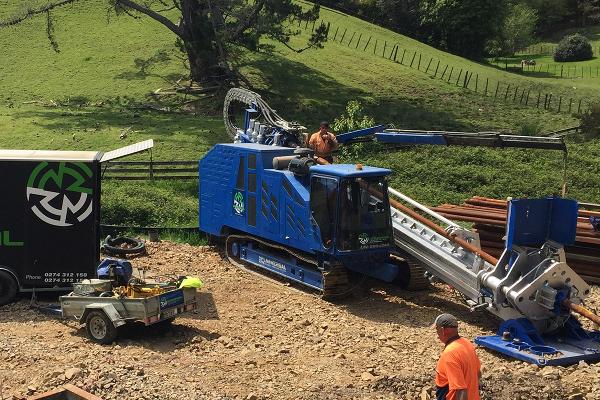
As a highly varied landscape filled with busy streets and rugged terrain, the North Island has plenty of settings that would make micro tunnelling a suitable process.
Micro tunnelling NZ projects share a common logic: a remotely operated boring machine is driven from a launch shaft to a reception shaft, and pipe is jacked in behind it. The ground between the two shafts is never opened, meaning surface disruption stays low wherever the land above is valuable or sensitive.
Busy city centre streets
Auckland's central streets carry heavy traffic, buses and large numbers of pedestrians. Underneath them sits a dense network of cables and pipes that has built up over many decades. Open trenching in this environment would typically call for significant lane closures, detours and long periods of noise.
Micro tunnelling confines surface work to the shafts, and those can often be placed at quieter intersections or on side streets. The machine is steered to a set line and grade, and the finished pipe follows the design closely. Businesses keep their footfall, and road users keep their lanes.
Urban corridors in seismic regions
Wellington and the wider lower North Island sit in a seismically active zone, and councils there place a high priority on resilient water, wastewater and stormwater networks. New pipelines, or newly upgraded infrastructure in tight urban valleys compete for space with existing assets, buildings and roads. Micro tunnelling gives designers more freedom to choose a depth and alignment that suit the ground rather than the obstacles at the surface. Installing pipe below existing services also reduces the need to relocate them. Reduced relocation shortens the programme and limits the number of parties affected.
River and stream crossings
The Waikato has a network of rivers, streams and drains that pipelines must cross. An open cut crossing usually needs temporary diversions, cofferdams and careful control of sediment. During micro tunnelling, the tunnel passes well beneath the streambed, construction avoids open-cut trenching across the waterway, and it keeps the streambed banks, riparian planting and aquatic habitats of local flora and fauna undisturbed. Geotechnical investigation beneath the riverbed are still an essential part of delivering safe works, because soft sediments and groundwater pressure influence machine selection, but it’s a great way to avoid a far more complex project.
Coastal and harbour margins
Northland, Auckland and the Bay of Plenty all have long stretches of coastline where reserves, dunes and beaches sit close to infrastructure. It’s common to utilise trenchless methods like microtunnelling and horizontal directional drilling (HDD) to comply with strict Resource Management Act (RMA) and regional coastal plan rules. A micro tunnelling drive can be launched from a shaft set well back from the beach and pass beneath the dune and foreshore. Beaches and reserves also stay open to the public, and heavy machinery is kept away from fragile coastal margins. Outfalls and shoreline sewers are common applications, since both must reach areas that people value for recreation.
National rail corridors and state highways
Railway lines and state highways are difficult to close, and the impact these closures have on congestion and the flow of traffic can have massive ramifications for councils and road authorities.
Micro tunnelling passes beneath the majority of works without disturbing the surface, improving congestion and reducing the impact of works. It also means less workers spending less time working amongst traffic, which can reduce health and safety risks.
Assessing micro tunnelling for your site
Surface use, depth and access usually decide whether micro tunnelling is appropriate., and ground conditions then determine whether the method is feasible. Soft ground, high groundwater and obstructions like rocks, existing cabling or piping make a geotechnical investigation absolutely critical before the start of the project.
Early engagement also helps with consenting, programme and cost. If your pipeline crosses any of the five settings above, speak with a micro tunnelling NZ specialist while the design is still flexible.