Small Backyard, Big Upgrade: How Auckland Homes Can Make Room for a Spa Pool
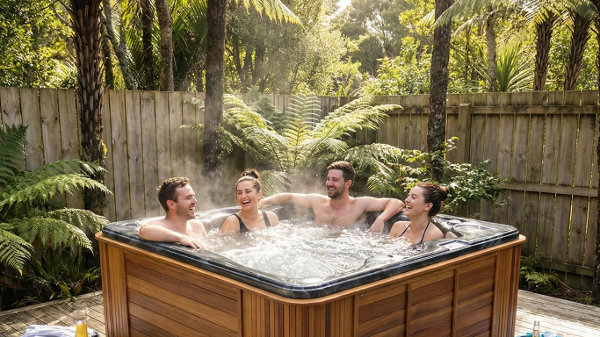
A large backyard is not a requirement for owning a spa pool.
Across Auckland, many homeowners are working with smaller sections, courtyards, decks, and more compact outdoor living areas. That can make adding a spa seem difficult at first, especially when space is already being shared between seating, landscaping, entertaining, and everyday family use.
But a well-planned spa does not need to dominate the backyard.
Choosing the right size, thinking carefully about placement, and designing the surrounding area around how the spa will actually be used can make a surprisingly small space work well.
Start With Who Will Actually Use the Spa
One of the easiest ways to overwhelm a smaller backyard is to buy more spa than the household genuinely needs.
It can be tempting to choose a large model because it offers more seats, but the most useful question is how many people will use the spa regularly.
For a couple, a 2 or 3 person spa may provide plenty of room while taking up considerably less outdoor space.
A 4 person spa can offer a useful middle ground for couples who want more room, small families, or households that occasionally have guests.
Larger spas make sense when they will genuinely be used by larger groups.
Choosing around everyday use rather than rare occasions can make the entire outdoor area easier to plan.
Measure More Than the Spa Itself
A common planning mistake is measuring the spa dimensions and assuming that is all the space required.
The area around the spa matters too.
Homeowners should allow room for:
getting in and out
steps
removing the cover
cleaning
servicing
access to equipment
safe movement around the spa
A spa may technically fit into a corner while still being frustrating to use if there is no practical space around it.
Marking the dimensions on the ground with tape, rope, or chalk can help visualise how much room the spa will really occupy.
Then walk around the marked area and imagine actually using it.
That simple exercise tends to reveal far more than staring optimistically at a tape measure.
Use the Shape of the Backyard
Compact spaces often work best when the spa is positioned as part of the existing layout rather than placed directly in the middle.
Depending on the property, this might mean locating it:
beside the house
against a boundary
within a courtyard
beside an existing deck
in a sheltered corner
as part of an outdoor entertaining area
Good positioning can help preserve open space and make the spa feel integrated into the property.
It can also improve access from the house, which becomes particularly valuable during winter or wet Auckland evenings.
Privacy Becomes More Important in Smaller Properties
Smaller urban properties often mean neighbours are closer.
That makes privacy an important part of spa placement.
A spa can feel much more comfortable when users are not directly visible from neighbouring windows, decks, or the street.
Privacy can be improved with:
screens
planting
fencing
pergolas
outdoor walls
careful seating orientation
You do not necessarily need to surround the spa completely.
Sometimes positioning it differently or adding one well-placed screen is enough to change how private the area feels.
Think About Shelter
Auckland weather can change quickly, and a spa that feels exposed may not get used as often as one in a more sheltered location.
Protection from wind can make a significant difference to comfort.
Shelter may come from:
the house
fences
planting
screens
pergolas
other outdoor structures
A sheltered position can also help reduce unnecessary heat loss from the spa.
The goal is not to completely enclose the area. Good ventilation, safe access, and room for servicing still matter.
Choose the Right Base
Spa pools are heavy once filled with water and people.
That means the base needs to be level, stable, and capable of supporting the full load.
Common options can include:
concrete pads
reinforced decks
appropriately prepared paved areas
If the spa is being installed on an existing deck, it is important to make sure the structure is suitable for the weight.
Homeowners should avoid assuming that because a deck comfortably holds outdoor furniture, it will automatically support a full spa.
Water has an inconvenient habit of being considerably heavier than patio chairs.
Keep the Design Around the Spa Simple
Small outdoor areas can quickly become cluttered.
A spa, seating, lighting, screens, planters, storage, and decorative features may all sound appealing individually, but combining everything in a compact backyard can make the area feel smaller.
A simpler approach often works better.
Consider using:
clean decking
a small number of plants
subtle lighting
one main privacy feature
practical nearby seating
The spa should feel like part of the outdoor space rather than something surrounded by every landscaping idea discovered online during one ambitious Sunday afternoon.
Smaller Spas Can Still Deliver Proper Hydrotherapy
Choosing a compact spa does not mean giving up a good hydrotherapy experience.
Spa size and massage quality are separate issues.
What matters more is:
jet placement
seating comfort
water pressure
seat depth
body position
overall design
A smaller spa can still provide targeted jets for areas such as the shoulders, back, legs, and feet.
For buyers primarily interested in relaxation or muscle recovery, it is worth comparing how the seats and jets are arranged rather than assuming a larger spa automatically provides better hydrotherapy.
Consider the Cover Before Finalising the Location
The spa cover needs somewhere to go when the spa is being used.
This is easy to overlook in a compact outdoor area.
Depending on the cover system, homeowners may need room behind or beside the spa for it to fold or lift.
Walls, fences, screens, and landscaping can all interfere if they are positioned too close.
Planning the cover from the beginning can prevent an otherwise tidy installation from becoming awkward every time someone wants to use the spa.
Keep Service Access Available
Building a spa neatly into decking can look excellent, but internal components still need to remain accessible.
Pumps, heaters, controls, and plumbing may eventually require servicing.
If the spa is being surrounded by decking or other structures, removable panels or suitable access points should be included.
Compact spaces make this especially important because there is less room for technicians to work around the spa.
A tidy installation should not require dismantling half the backyard when a component needs attention.
Think About the Route From the House
A spa that is easy to reach will generally get used more often.
The route between the house and spa should ideally be:
short
well lit
safe when wet
free from unnecessary obstacles
This becomes particularly important in winter.
A spa at the far end of the section may offer more privacy, but enthusiasm can drop sharply when getting there involves wet grass, cold wind, and a barefoot expedition through the garden.
For many smaller Auckland homes, placing the spa closer to the house can make the entire setup more practical.
Choose for Everyday Life, Not Maximum Capacity
One of the most useful principles when planning a spa for a compact property is to choose around normal use.
A household of two does not necessarily need a six-person spa simply because friends occasionally visit.
Likewise, a family should not choose something too small if several people will regularly use it together.
Trueform Spas manufactures a range of spa sizes in New Zealand, including compact models through to larger family and entertaining options.
For buyers working with restricted outdoor space, comparing 2, 3, and 4 person models can be a useful starting point.
The right choice depends on the number of regular users, preferred seating layout, available space, and how much of the backyard homeowners want the spa to occupy.
Compact Outdoor Spaces Can Still Work Well
A smaller backyard does not automatically rule out a spa pool.
In many cases, the challenge is less about absolute space and more about using the available area intelligently.
Choosing an appropriately sized spa, allowing enough room around it, planning privacy and shelter, and integrating it with the existing outdoor layout can produce a space that feels comfortable rather than crowded.
For Auckland homeowners working with courtyards, compact decks, or smaller sections, good planning can make a bigger difference than simply having more land.
The goal is not to fit the largest possible spa into the backyard.
It is to create an outdoor space that people will genuinely enjoy using.